NEWS & EVENTS
Campaign Planning Students Partner with World Vision Hong Kong
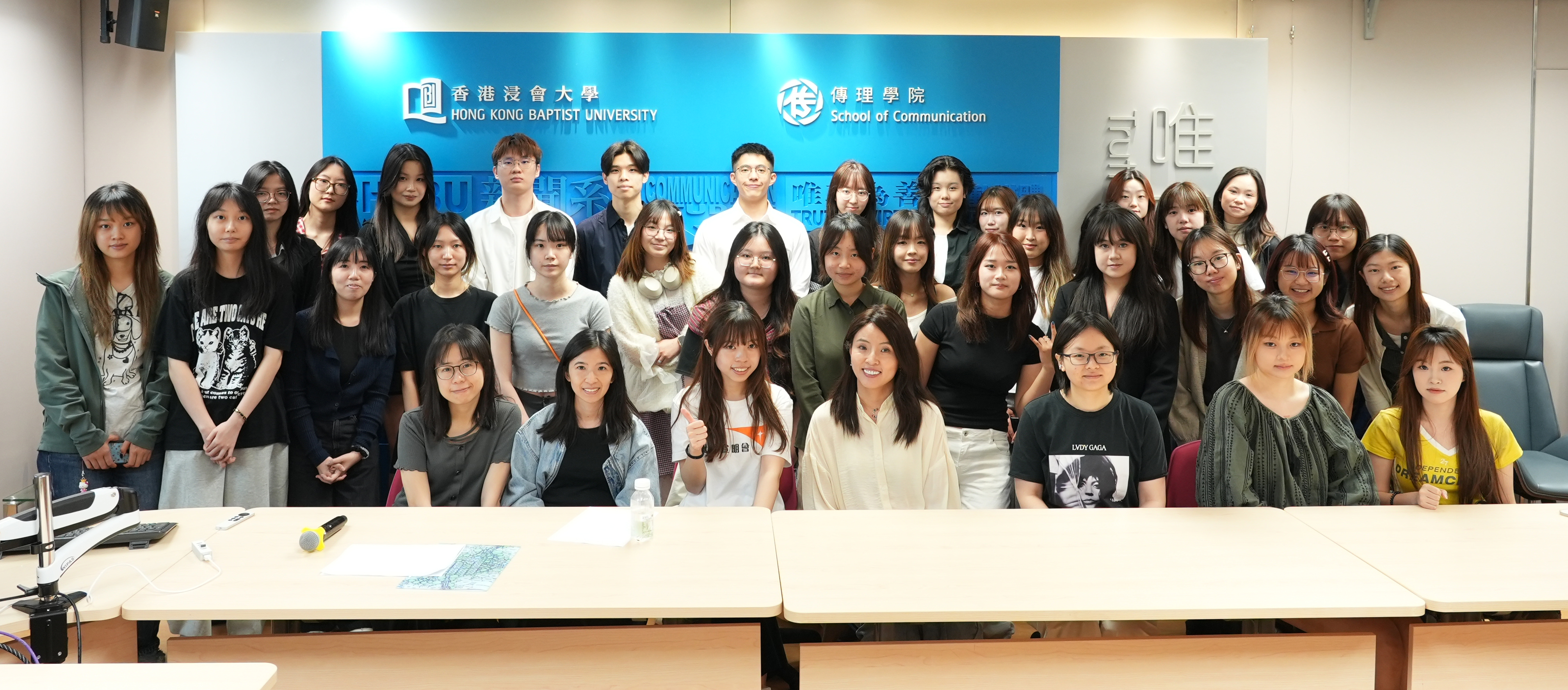
Students enrolled in the campaign planning course taught by Dr Vivienne Leung took their work beyond the classroom, developing real-world communications proposals in collaboration with World Vision Hong Kong as part of a service-learning project supported by the Centre for Innovative Service-Learning (CISL) at HKBU.
The project centred on a live brief from the international humanitarian organisation: to promote its new mascot, Granville Village, and raise awareness of food insecurity among children and young people. The subject matter presented students with a creative and an ethical challenge. Their task was to go beyond designing a campaign, as they had to communicate a difficult, often abstract issue in ways that would resonate with young audiences.
Divided into six teams, students developed integrated IMC proposals targeting four distinct audience segments: kindergarten children, primary school students, secondary school students, and university students. Each proposal was grounded in a defined strategy and supported by audience research, requiring students to think carefully about how a message must shift in tone, format, and depth depending on who it is trying to reach.
To address the challenge of engaging young audiences with a serious topic, students proposed a range of gamified experiences designed to simultaneously build curiosity and empathy. Concepts included a Granville Village-themed Monopoly game, personality tests, escape-room formats, and other immersive experiential activities. The common thread across these proposals was a commitment to making hunger both tangible and personally relevant.
The project extended beyond proposal development. Students participated directly in World Vision's service-learning activities, including the School Famine Ambassador Programme, and conducted interviews with programme participants to gather first-hand accounts of food insecurity. This fieldwork gave students a direct line to the human stories behind the issue, informing their proposals with lived experience rather than secondary data alone.
The department extends its appreciation to World Vision Hong Kong for providing a meaningful brief and professional guidance throughout the project, and to CISL for its